- Home
- Object storage
Cloud storage, without the cloud account
Object storage
S3 and Azure Blob Storage, as connections like any other — created and filed exactly like an SSH host.
What it does
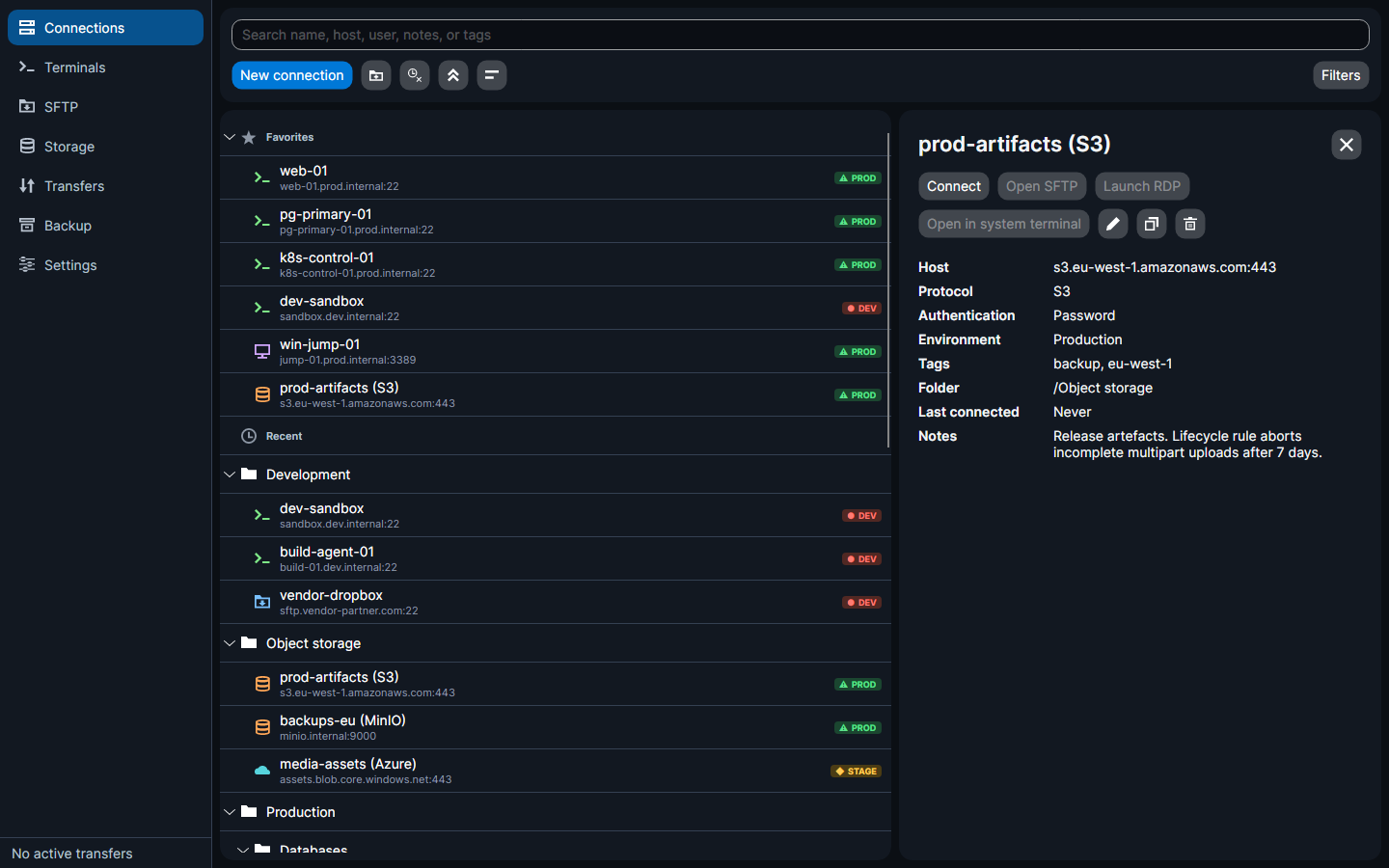
- Storage is a connection type
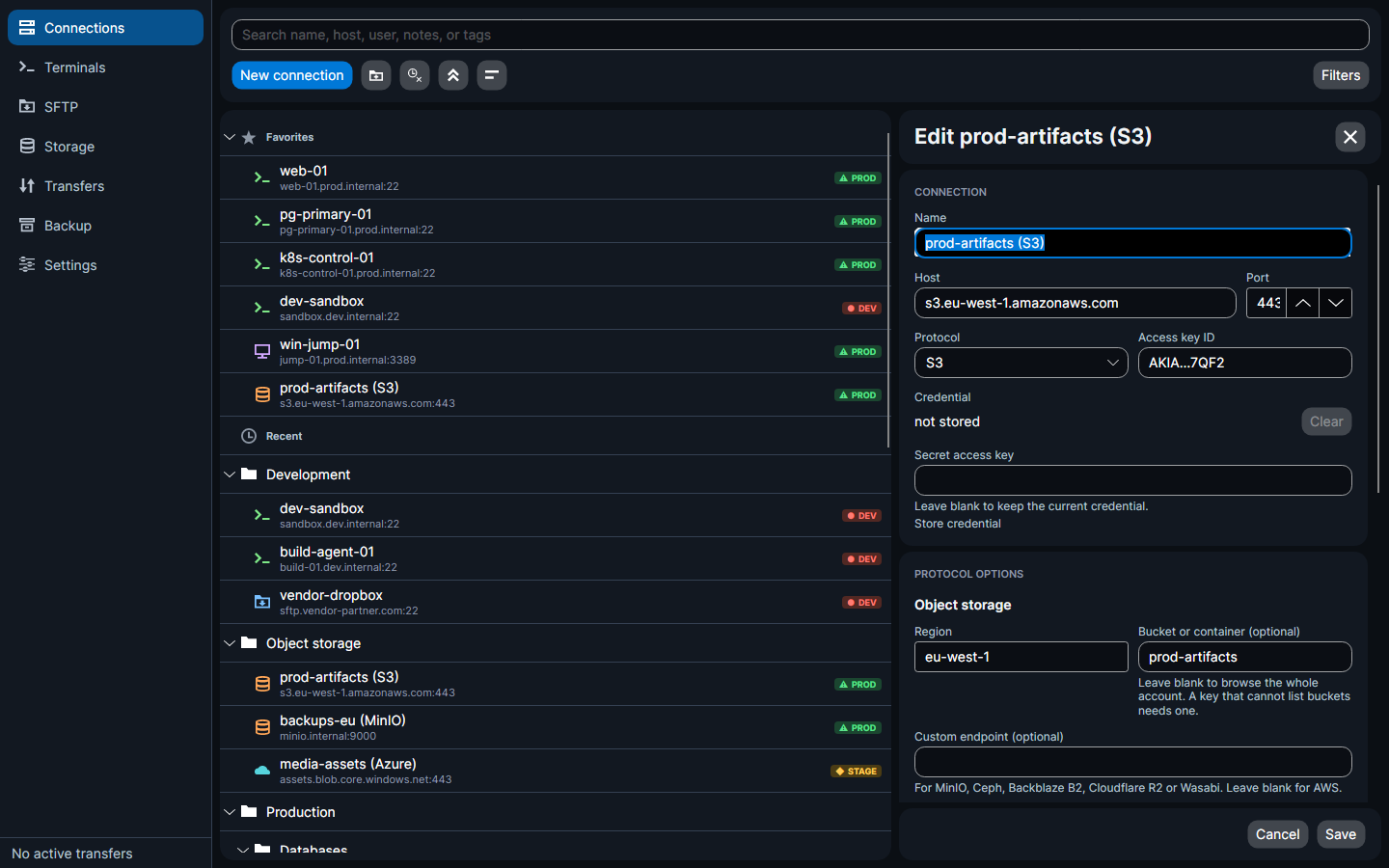
Amazon S3 and Azure Blob Storage are created and filed exactly like an SSH host, with their own glyphs in the tree.
- S3-compatible services work through a custom endpoint
MinIO, Ceph/RGW, Backblaze B2, Cloudflare R2 and Wasabi, with a path-style-addressing switch (most of them need it; AWS does not).
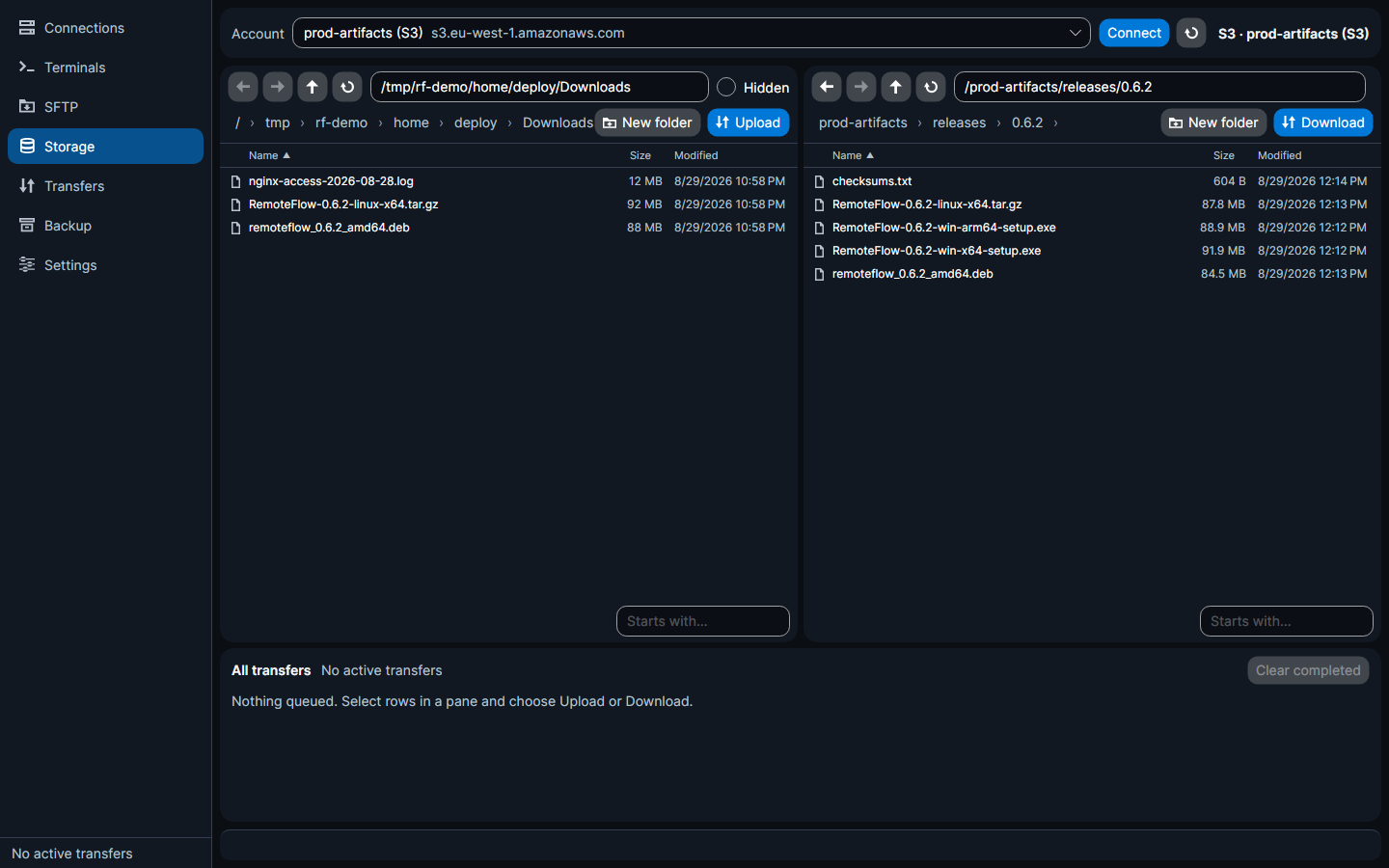
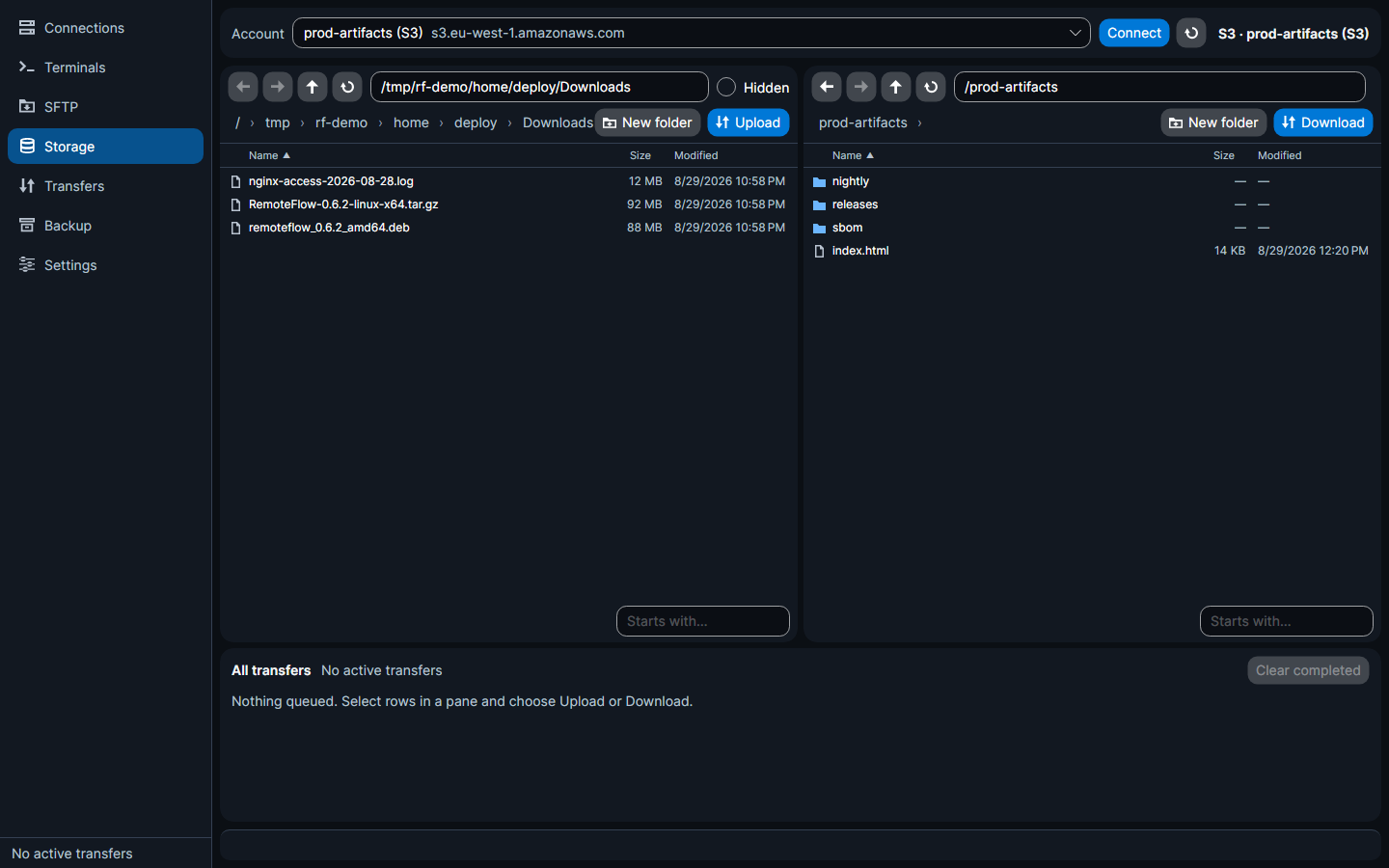
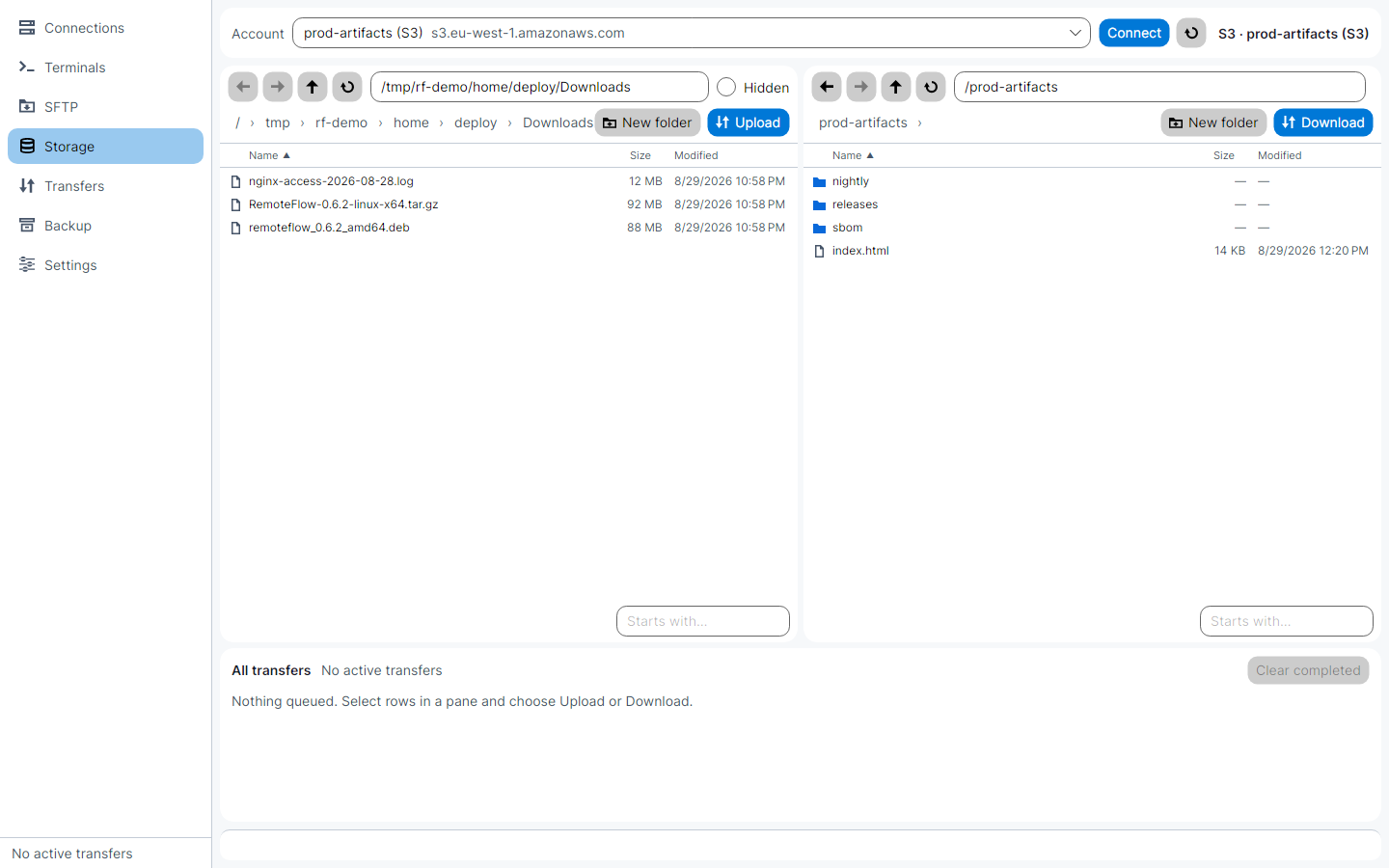
- The same dual-pane workspace as SFTP
Your own files beside the bucket, transfer queue underneath.
- Sovereign clouds are reachable
Host and port derive themselves from the region or account, and stop doing so the moment you type over them.
- Scope to one bucket or container
An optional root prefix covers the common production case where a key cannot list buckets at all. RemoteFlow says so and names the remedy rather than showing an empty account.
- Prefixes shown as folders
The zero-byte marker object both vendors' consoles create for an empty folder is shown once, as that folder — never also as an empty file.
- Gigabytes in parallel chunks
Objects move in parallel chunks, and a failed part is retried rather than the whole transfer.
- “Starts with” is a prefix request, not a search
The filter box re-asks the provider with a longer prefix — neither provider can search by substring, so it never silently hides matches that were never fetched.
- Keys live in the OS credential store
Never in RemoteFlow's database, and clients are always built with the key you entered — RemoteFlow never falls through to the AWS SDK credential chain, so it cannot silently use
~/.aws/credentialsor an instance metadata endpoint you did not mean to reach.
The storage workspace
Configured like any connection
Cloud storage is not RemoteFlow having a cloud
An S3 or Azure connection is a host you configured. The traffic goes from your machine to your bucket: no RemoteFlow account, no broker in the middle, no storage of ours anywhere in the path. More on the security page.